-
You have no items in your shopping cart.
- Register
- Log in
- Wishlist
- Shopping cart

Power Inverter Solution
To choose a power inverter, work backward from your loads. Add up the watts you run at the same time, add about 20% headroom, check the startup surge of motor-driven appliances, and match the inverter's DC input (12V, 24V, or 48V) to your battery. A plug-in car inverter covers phones and laptops. A 12V inverter of 500W to 1000W covers camping and mobile work. Larger RV, van, and cabin systems run better at 24V or 48V, where the same power draws half or a quarter of the current.
The 4 reference setups below show how this works in practice. Each one lists the loads, the inverter that fits, the battery and current it implies, and what to expect. They are reference configurations calculated from manufacturer specifications, not records of customer installations. Assumptions are stated so you can swap in your own numbers.

Inverter.com Products For Use:
 |
 |
 |
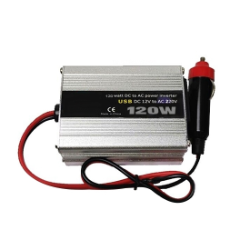 |
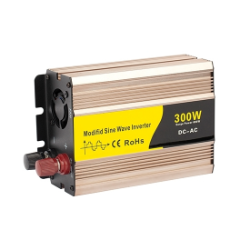
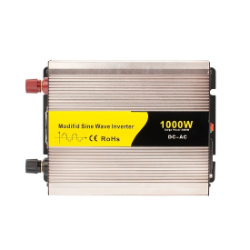
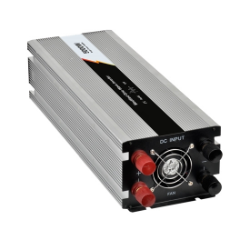
| 12V Inverter | 24V Inverter | 48V Inverter | Car Inverter |
Quick Selection Table
| Setup | Typical simultaneous load | System voltage | Inverter size | Start here |
| Tier 1: Car and road trip | 60–300W | 12V (24V for trucks) | 60–300W | Car Inverter |
| Tier 2: Camping and mobile work | 300–1000W | 12V | 500–1000W | 12V Inverter |
| Tier 3: RV, van, truck, or boat | 1000–2000W | 24V | 2000–3000W | 24V Inverter |
| Tier 4: Off-grid cabin and backup power | 2000–5000W | 48V | 3000–5000W | 48V Inverter |
- For the full model list and specifications, see the Power Inverter category.
How to Size Any Power Inverter?
- List the loads you run at the same time and add their rated watts.
- Add 20% headroom so the inverter doesn't run at its limit.
- Check startup surge. Refrigerators, pumps, and power tools can briefly draw several times their running watts. The inverter's peak rating must cover that moment.
- Estimate the DC your battery and cables must carry: watts ÷ (0.9 × battery voltage). The 0.9 reflects the up-to-90% maximum efficiency listed for these inverters, so real current at full load will be slightly higher.
DC at full rated load, by system voltage (nominal battery voltage, 90% efficiency):
| Inverter | 12V input | 24V input | 48V input |
| 1000W | about 93A | about 46A | about 23A |
| 2000W | about 185A | about 93A | about 46A |
| 3000W | about 278A | about 139A | about 69A |
| 5000W | / | / | about 116A |
This is why larger systems move to higher voltage. A 3000W load on a 12V battery needs cabling and fusing for nearly 280A, while the same load at 48V needs about 70A. Current rises further as a battery discharges and its voltage sags.
🔴Tier 1: Car and Road Trip (60–300W)
Problem. A driver wants to charge a laptop and two phones on a long trip, without an AC outlet nearby.
Challenge. A vehicle's cigarette lighter socket is typically fused at 10–15A, which limits what it can deliver to roughly 120–180W at 12V. Choosing an inverter too large for the socket blows the fuse. Choosing one too small leaves a laptop charger underpowered.
Reference configuration.
| Load | Watts |
| Laptop charger | 65W |
| Two phone chargers | 36W |
| Camera battery charger | 15W |
| Total | 116W |
With 20% headroom, the target is about 140W. DC draw is about 116 ÷ (0.9 × 12) ≈ 11A, which fits a typical lighter socket.
- Plug-in option: 150W Car Power Inverter or 200W Car Inverter (2 AC outlets, 2 USB and 2 Type-C ports).
- Laptop-only option: 60W Car Power Inverter, a pure sine wave model with 12V/24V input.
- For loads over about 150W, use a model with battery clamps, such as the 180W Car Power Inverter or the 400W Car Power Inverter, so the load bypasses the lighter socket.
Outcome. All devices charge from one inverter without stressing the socket. Run the engine, or keep trips short, when charging from the starter battery.
🔴Tier 2: Camping and Mobile Work (300–1000W)
Problem. A weekend camper or mobile tradesperson working from a pickup or SUV wants a small fridge, lights, a laptop, and a tool battery charger running from a deep-cycle battery.
Challenge. The fridge compressor draws a surge when it starts, the tool charger adds a steady load, and the battery has a limited number of watt-hours. The inverter must handle the peak without wasting battery on idle consumption.
Reference configuration (assumptions: 12V battery, mini fridge rated 60W with about 40% duty cycle).
| Load | Running watts | Hours per day | Energy (Wh) |
| Mini fridge (AC) | 60W | 24h at 40% duty | 576 |
| Laptop | 65W | 4h | 260 |
| LED lights | 20W | 5h | 100 |
| Phone chargers | 30W | 2h | 60 |
| Tool battery charger (occasional) | 150W | not counted in daily total | n/a |
| Daily total | / | / | about 996 Wh AC |
- Peak running load: 60 + 65 + 20 + 30 + 150 = 325W. With 20% headroom, about 390W.
- Startup surge: if the fridge briefly draws 3–5 times its running watts (about 180–300W), the peak stays near 565W, within the peak rating of a 500W unit.
- Inverter: 12V 500W Inverter, 1000W peak. For more margin or remote switching, the 12V 600W Inverter lists wired (3m) and wireless (20m) control, with a no-load current under 0.3A.
- DC side: about 996 ÷ 0.9 ≈ 1,100 Wh per day from the battery. A 12V 100Ah lithium battery holds about 1,280 Wh nominal, so plan on one day of autonomy, or add a recharge source such as a portable solar panel or the vehicle's alternator. Full-load current at 500W is about 46A.
Outcome. The inverter covers the fridge startup and all daily loads. Switch it off when nothing is running, because idle (no-load) draw adds up over a day.
If your loads grow to 800–1000W, step up to the 12V 1000W Inverter and plan for about 93A of battery current.
🔴Tier 3: RV, Van, Truck, or Boat (1000–2000W)
Problem. An RV owner wants a refrigerator, lights, a laptop, a fan, and a microwave on a solar-charged battery bank, without relying on campground hookups.
Challenge. A microwave and a compressor fridge start together, which sets the inverter's peak. At 12V, a 2000W inverter would pull about 185A at full load, which strains cables, fuses, and the battery. A 24V system halves that current.
Reference configuration (assumptions: 24V system, 5 × 120W solar panels, two 12V 200Ah batteries wired in series for 24V 200Ah, about 4 peak sun hours).
| Load | Running watts | Hours per day | Energy (Wh) |
| Fridge (AC) | 60W | 24h at 40% duty | 576 |
| LED lights | 20W | 5h | 100 |
| Laptop and phones | about 75W | 4h | 300 |
| Microwave (input draw) | 1200W | 10 min | 200 |
| Fan | 30W | 8h | 240 |
| Daily total | / | / | about 1416 Wh AC |
- Peak load: microwave 1,200W + fridge startup (about 300W) + other loads (about 200W) ≈ 1,700W. That fits the 24V 2000W Inverter, 4000W peak. Choose the 24V 3000W Inverter only if you add heavier loads such as an air conditioner. A larger inverter than needed gains nothing and draws more at idle.
- Energy balance: about 1,416 ÷ 0.9 ≈ 1,570 Wh per day from the battery. Solar input is roughly 600W × 4h × 0.75 system efficiency ≈ 1,800 Wh per day, so the array covers the load with a small surplus on a sunny day. Use an MPPT solar charge controller sized to the array's voltage and current.
- Battery: 24V 200Ah is about 4.8 kWh nominal. Lead-acid used to 50% depth of discharge gives about 2.4 kWh, or around 1.5 days without sun. Lithium (LiFePO4) used to 80–90% gives about 3.8–4.3 kWh, or around 2.4–2.7 days.
- Current: a 2000W inverter at 24V draws about 93A at full load; a 3000W unit about 139A. Size cables and fuses to the inverter manual.
- Dual-battery vehicles: isolate the starter battery from the house bank with a relay or battery isolator so loads cannot drain the battery that starts the engine.
Outcome. The array replaces what the loads use on a typical day, and the bank carries the system through cloudy stretches. For sensitive electronics, or if you want a UPS function with a built-in charger, see the Pure Sine Wave UPS Inverter and Off-Grid Inverter categories.
Boats: marine installations have additional requirements. See Marine Inverter.
🔴Tier 4: Off-Grid Cabin and Backup Power (2000–5000W)
Problem. A cabin owner needs lights, a fridge, a router, a water pump, and an occasional power tool from a battery bank.
Challenge. A water pump motor can draw 2–3 times its running watts at startup, and a power tool adds a high continuous load. At these power levels, 12V cabling becomes impractical.
Reference configuration (assumptions: 48V battery bank, 750W water pump running about 30 minutes per day, tool use about 1 hour per day).
| Load | Running watts | Hours per day | Energy (Wh) |
| Fridge (AC) | 60W | 24h at 40% duty | 576 |
| Lights | 150W | 1h | 150 |
| Router and laptop | about 80W | 5h | 400 |
| Water pump | 750W | 0.5h | 375 |
| Power tool | 1000W | 1h | 1000 |
| Daily total | / | / | about 2500 Wh AC |
- Peak load: tool 1,000W + pump startup (up to about 2,250W at 3×) + fridge 60W ≈ 3,300W. Continuous running load is about 1,800W.
- Inverter: 48V 3000W Inverter covers the continuous load. Confirm its surge rating for the pump startup. Choose the 48V 5000W Inverter (10,000W surge) for larger motors or added loads.
- DC side: about 2,500 ÷ 0.9 ≈ 2,800 Wh per day. A 48V 100Ah bank is about 4.8 kWh nominal. At 3000W, the inverter draws about 69A, a fraction of the 278A a 12V system would need.
- Pumps and motors: These inverters are modified sine wave, with a pure sine option on the 48V 2000W Inverter. Motors generally run cooler and quieter on pure sine wave, so see the 48V Pure Sine Wave Inverter for pump-heavy systems.
Outcome. A single 48V inverter runs the cabin's loads at manageable current, and the bank can be expanded later without changing the inverter voltage.
Modified Sine Wave or Pure Sine Wave?
The inverters in these categories output a modified sine wave. That works well for resistive loads (heaters, incandescent or LED lighting) and for most laptop, phone, and camera chargers. Pure sine wave output is a better match for motors and compressors, audio and medical-type equipment, and anything with a timer or dimmer. If a load is sensitive, check its manual or choose from the Sine Wave Inverter range.
Installation and Safety Checklist
- Match the inverter's DC input voltage to the battery voltage.
- Keep DC cables as short as practical and size them for the full-load current in the table above, following the inverter manual and local electrical code.
- Install a properly rated DC fuse or breaker close to the battery positive terminal.
- Connect to the battery terminals directly for loads above about 150W. Do not rely on the lighter socket.
- Leave space around the inverter for airflow, and do not cover the cooling fan.
- Turn the inverter off before connecting or disconnecting loads.
- Use a battery monitor to avoid deep discharge.
For troubleshooting and everyday tips, see the Power Inverter category page.
Frequently Asked Questions about Power Inverters
- Q1: What size power inverter do I need?
Add the watts of everything you run at the same time, then add about 20%. Check that the inverter's peak rating covers the startup surge of motor-driven appliances such as refrigerators and pumps. - Q2: Can a power inverter run a refrigerator?
Yes, if the inverter's continuous and peak ratings cover the fridge's running watts and its startup surge. A compressor fridge can briefly draw several times its running watts. For a small fridge, a 500W 12V inverter is a typical starting point. - Q3: Should I choose a 12V, 24V, or 48V inverter?
Match your battery. Beyond that, higher voltage means lower current for the same power, which allows smaller cables and less loss. Up to about 1000W, 12V is common. For 2000W and above, 24V or 48V is usually more practical. - Q4: Is a modified sine wave or pure sine wave better?
A modified sine wave is suitable for resistive loads and most chargers. A pure sine wave suits motors, compressors, audio equipment, and sensitive electronics. - Q5: Can I run a laptop from a car inverter plugged into the cigarette lighter?
Yes. Lighter sockets are typically fused at 10–15A, which limits power to roughly 120–180W. For higher loads, use an inverter with battery clamps. - Q6: How do I work out how big a battery I need?
Add up daily energy in watt-hours (watts × hours for each load), divide by 0.9 for inverter losses, and compare the result with the battery's usable capacity. Lithium batteries can usually be used deeper than lead-acid, so they provide more usable energy per rated amp-hour. - Q7: Should I leave the inverter on when nothing is plugged in?
It is better to switch it off. Every inverter draws some current at no load. For example, a 12V 600W model lists a no-load current under 0.3A, which is about 3.6W, or roughly 86 Wh per day. A 12V 1000W model lists a no-load current under 0.8A.


