-
You have no items in your shopping cart.
- Register
- Log in
- Wishlist
- Shopping cart

Frequency Inverter
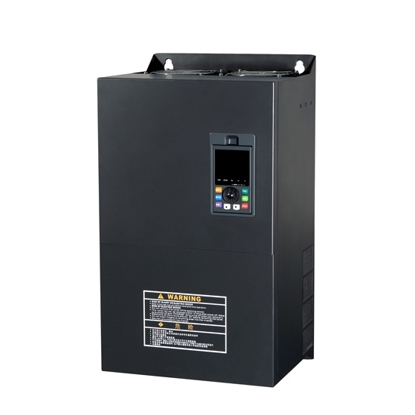
55 kW Frequency Inverter, 3 Phase 240V, 380V, 480V
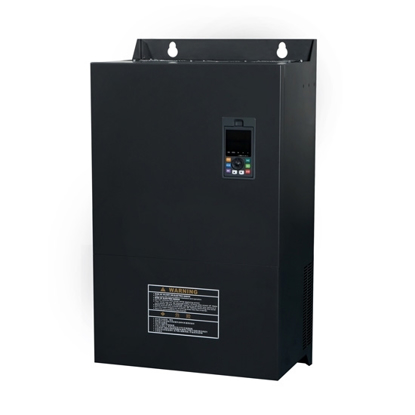
75 kW Frequency Inverter, 3 Phase 220V, 380V, 460V

90 kW Frequency Inverter, 3 Phase 230V, 400V, 460V
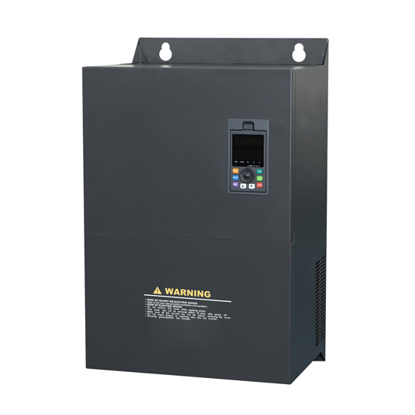
110 kW Frequency Inverter, 3 Phase 208V, 380V, 460V
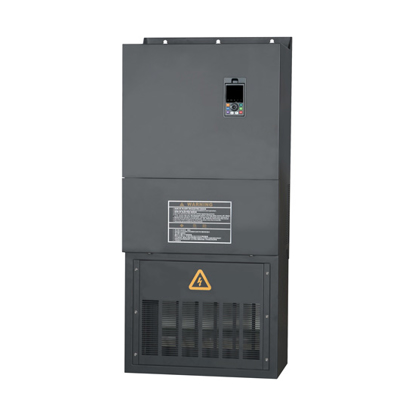
160 kW Frequency Inverter, 3 Phase 240V, 400V, 480V
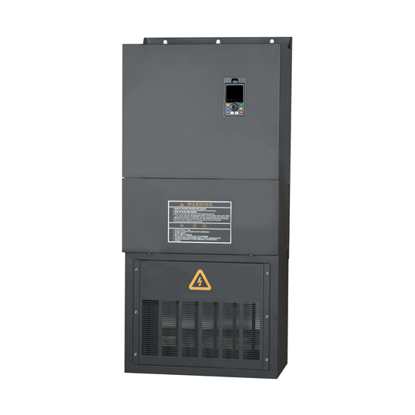
220 kW Frequency Inverter, 3 Phase 220V, 415V, 460V
A frequency inverter — also called a variable frequency drive (VFD) or AC drive — controls the speed of an AC motor by adjusting the frequency and voltage of its power supply. Rather than running a motor at fixed speed, a VFD lets you set precise RPM for your application, cutting energy use by up to 50% compared to direct-on-line starting.
Internally, a frequency inverter works in three stages: a rectifier converts incoming AC to DC, a DC bus filters and stores that energy, and an inverter stage converts it back to AC at the target frequency. This AC-DC-AC process enables variable-speed control without mechanical components.
Inverter.com offers frequency inverters from 0.4kW to 220kW across four input/output configurations: single-phase in/out, single-phase to three-phase, three-phase to three-phase, and 120V input models for the North American market. All in-stock units ship from our Los Angeles warehouse.
The Difference between a Power Inverter and a Frequency Inverter
- A power inverter and a frequency inverter serve fundamentally different purposes, even though both deal with AC power.
- A power inverter converts DC input — from a battery, solar panel, or other DC source — into AC output at a fixed frequency (50 Hz or 60 Hz depending on region). It is used to run household appliances or equipment from a DC power source when grid power is unavailable.
- A frequency inverter (VFD) takes AC input and outputs AC at a variable frequency and voltage, allowing precise control of motor speed. It does not change DC to AC — it reshapes AC to AC through a three-stage process: rectification (AC to DC), DC bus filtering, and inversion (DC back to AC at the target frequency).
- The key distinction: a power inverter is an energy source converter; a frequency inverter is a motor speed controller.
| Difference | Power Inverter | Frequency Inverter (VFD) |
| Input | DC (battery/solar) | AC (grid power) |
| Output | AC at fixed frequency (50/60 Hz) | AC at variable frequency (0–400 Hz) |
| Primary Uses | Run AC devices from a DC source | Control AC motor speed & torque |
| Working Principle | DC → AC | AC → DC → AC (AC-DC-AC) |
| Tipical Applications | Off-grid power, vehicle power | Pumps, fans, CNC, conveyors |
Why Choose a Frequency Inverter?
- Adjustable torque limit: A VFD lets you set a precise torque ceiling to protect motors from overload — control accuracy typically reaches ±3–5%, far tighter than thermal protection alone.
- Energy savings up to 50%: Fan and pump loads follow the Affinity Laws — reducing motor speed by 20% cuts power consumption by nearly 50%. A VFD eliminates the wasted energy of throttling valves and dampers.
- Controllable stopping mode: VFDs support multiple deceleration profiles (ramp-to-stop, free-coast, DC braking) — reducing mechanical stress on motors and extending equipment service life.
- Reversible operation control: Reversing motor direction requires only a phase-sequence change in software, with no additional contactors or mechanical reversing switches needed.
- Reduce mechanical transmission: When combined with synchronous motors, vector-controlled VFDs eliminate gearboxes and mechanical couplings, reducing system footprint and maintenance requirements.
How to Select a Frequency Inverter?
- Input voltage and phase: Match the VFD's input voltage and phase configuration to your available power supply. Size the VFD's rated current at least 10% above the motor's nameplate current — but avoid oversizing beyond one step, which adds cost without improving control accuracy.
- Load type: For constant-torque loads (hoists, compressors, extruders), choose a heavy-duty rated VFD and verify the drive's overload capacity — typically 150% for 60 seconds. For variable-torque loads (fans, pumps), standard duty is sufficient.
- Braking requirements: If your application involves frequent start/stop cycles or requires holding a load in position (hoists, cranes), look for a VFD with a built-in braking unit or dynamic braking resistor support. Regenerative braking recovers energy but adds upfront cost.
- Sensor and PID support: Applications like pumps and HVAC systems benefit from VFDs with built-in PID control, which can close the loop directly with a pressure or temperature sensor — eliminating a separate controller and reducing wiring complexity.
- Communication ports: For SCADA integration or PLC control, verify the VFD supports the required protocol — RS-485/Modbus is standard; some applications require CANopen or Profibus. All GK3000-series VFDs include RS-485 Modbus as standard.
- Environment rating: Check the VFD's IP rating against your installation environment. Standard IP20 suits clean indoor panels; washdown or outdoor installations require IP54 or higher. Operating temperature range and altitude derating should also be confirmed before ordering.
Frequency Inverter Types at Inverter.com
- Single-Phase Input/Output VFDs (0.4kW–5.5kW): For single-phase motors on a 220V supply. Ideal for small machinery, woodworking equipment, and light commercial applications. → Shop Single-Phase Output Inverters
- Single-Phase to Three-Phase VFDs (0.4kW–11kW): Convert standard 220V single-phase power to three-phase output — run three-phase motors without upgrading utility service. The most popular configuration for small shops and agricultural use. → Shop Single- to Three-Phase Inverters
- Three-Phase VFDs (0.75kW–220kW): Full industrial range for three-phase input environments. Includes 480V models for North American industrial standards. → Shop Three-Phase Inverters
- 120V Input VFDs (0.75kW–5.5kW): Take 120V single-phase input and output 220V single- or three-phase — designed for the US residential and light commercial market. → Shop 120V Input Inverters
Frequently Asked Questions
- What's the difference between a frequency inverter and a VFD?
A1: They are the same device. "Frequency inverter," "variable frequency drive (VFD)," "AC drive," and "inverter drive" are all terms for the same motor controller. "VFD" is more common in North America; "frequency inverter" is widely used internationally. - Can a frequency inverter convert single-phase power to three-phase?
A2: Yes. A single-to-three-phase VFD accepts 220V single-phase input and produces three-phase output, allowing three-phase motors to run on a single-phase supply without a rotary phase converter. - How do I size a frequency inverter for my motor?
A3: Match the VFD's kW (or hp) rating to your motor's nameplate. For most fan and pump applications, a 1:1 match is sufficient. For high-inertia loads (compressors, conveyors), size up one step — e.g., use a 2.2kW VFD for a 1.5kW motor. - Do Inverter.com VFDs ship from the US?
A4: Yes. In-stock models will ship from our Los Angeles, CA, warehouse as far as possible. Contact sales@inverter.com for stock availability.
