
Solar in-ground lights have become a popular choice for outdoor lighting in gardens, driveways, pathways, patios, and landscape designs. They are energy-efficient, easy to install, and environmentally friendly. However, their performance is not constant throughout the year. Weather conditions play a crucial role in determining how well these lights charge, how long they stay illuminated, and how long they last overall.
Understanding the relationship between weather and solar ground lights helps users choose the right products, optimize installation, and maintain better long-term performance. This article explores in detail how different weather factors—sunlight, moisture, rain, snow, and seasonal changes—affect solar in-ground lighting systems.
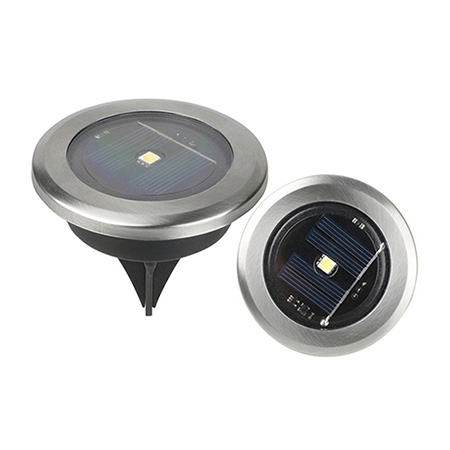
The Basic Working Principle of Solar In-Ground Lights:
To understand weather impact, it is important to first know how solar powered ground lights work. These lights typically consist of:
- A solar panel (usually monocrystalline or polycrystalline silicon)
- A rechargeable battery (commonly NiMH)
- LED light source
- A light sensor (automatic on/off function)
- A protective casing for outdoor installation
During the day, the solar panel converts sunlight into electricity and stores it in the battery. At night, the stored energy powers the LED lights automatically. Because sunlight is the only energy input, any weather condition affecting sunlight directly influences performance.
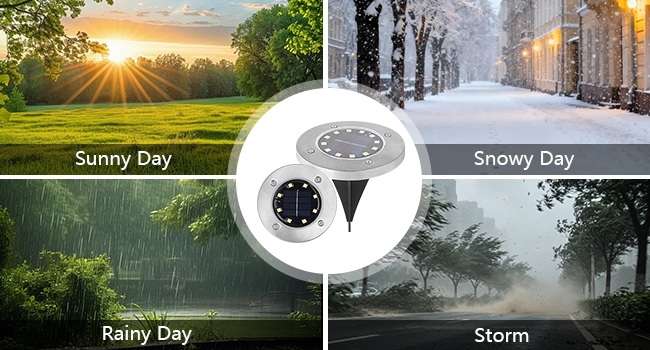
Solar In-ground Lights in Different Weather Conditions:
1. The Role of Sunlight Intensity in Solar Charging Efficiency
Sunlight is the primary energy source for solar in-ground lights, and its intensity directly determines how effectively the built-in solar panels can convert light into electrical energy.
Direct sunlight: Optimal performance
- Strong, direct sunlight is the ideal condition for solar ground lights. Under full sun exposure:
- Batteries charge quickly and fully
- Lights operate for the maximum duration (6–8 hours)
- Brightness remains stable throughout the night
In regions with long sunny days, solar lights typically perform at peak efficiency year-round.
Weak sunlight: Reduced charging capacity
- On cloudy or hazy days, sunlight intensity decreases significantly. As a result:
- Charging time increases
- Battery may not reach full capacity
- Night runtime is shortened
Even though solar panels can still generate electricity under diffuse light, efficiency may drop to 20–50% compared to full sun conditions. In regions with seasonal variations in sunlight, users often notice a significant decline in performance. Therefore, solar in-ground lighting systems should always be selected based on local solar irradiation levels and seasonal weather patterns to ensure consistent functionality throughout the year.
2. Snow, Ice, and Cold Weather Challenges
Cold climates introduce a different set of challenges for solar in-ground lights. Snow accumulation is one of the most significant factors affecting their performance. When snow covers solar panels, it completely blocks sunlight from reaching the photovoltaic cells, preventing any energy generation. Even a thin layer of snow can significantly reduce charging efficiency.
Ice formation presents another problem. When temperatures drop below freezing, moisture can freeze on the surface of solar panels, making it difficult for light to penetrate. In addition, repeated freeze-thaw cycles can stress the structural materials of the lights, potentially leading to cracks in plastic housings or weakening of seals.
Battery performance is also affected by low temperatures. Most solar lights use Ni-MH batteries, both of which experience reduced efficiency in cold weather. At low temperatures, chemical reactions inside the battery slow down, resulting in decreased capacity and shorter operating times during the night.
Regular maintenance, such as clearing snow from surfaces, is also essential to maintain functionality during winter months.
3. Impact of Rainfall and Moisture on Performance and Durability
Rain is one of the most common environmental factors affecting outdoor lighting systems. Most led solar ground lights are designed with waterproof ratings such as IP44, IP65, or higher, which allow them to withstand rain exposure. However, continuous or heavy rainfall can still influence both performance and structural integrity over time.
From a performance perspective, rainy weather reduces sunlight availability, which in turn limits battery charging. Additionally, accumulated water on the solar panel surface can further block sunlight absorption, reducing efficiency even during intermittent clear skies. Dirt and debris carried by rainwater can also settle on the panel, forming a thin film that decreases light transmission.
From a durability perspective, prolonged exposure to moisture can challenge the sealing quality of the light housing. If the waterproof design is not well engineered, water may slowly seep into the internal components, leading to corrosion of circuit boards, battery degradation, or lens fogging. High-quality led solar in-ground lights typically use reinforced seals, silicone gaskets, and corrosion-resistant materials like stainless steel or ABS plastic to prevent these issues.
In flood-prone areas or regions with frequent heavy rainfall, proper drainage around installation sites is also crucial. Standing water around in-ground fixtures can increase pressure on seals and shorten product lifespan if not properly managed.
4. Wind and Storm Conditions
Wind is another environmental factor that can influence solar buried lighting systems, although its effects are often indirect. Strong winds are typically associated with storms, which bring rain, dust, and debris that can affect solar panel performance. Dust carried by wind can accumulate on panel surfaces, reducing their ability to absorb sunlight effectively. In extreme storm conditions, physical damage is also a risk. Poorly installed or low-quality solar lights may become dislodged or damaged by flying debris.
Some advanced models are designed with reinforced casings and impact-resistant glass covers to withstand storm conditions. However, regular cleaning and inspection are still necessary, especially in areas prone to sandstorms or hurricanes.
5. Seasonal Changes and Long-Term Performance Variability
Seasonal variation is one of the most important factors influencing solar ground light performance over the long term. In summer, longer daylight hours and stronger sunlight result in excellent charging efficiency and extended nighttime illumination. In contrast, winter months bring shorter days, weaker sunlight, and more frequent cloud cover, all of which reduce system performance.
These seasonal fluctuations mean that users may notice differences in brightness and operating duration throughout the year. In regions with significant seasonal variation, it is important to select solar lights with high-capacity batteries and efficient solar panels to compensate for reduced winter charging.
Additionally, vegetation growth during spring and summer can also affect performance. Trees, shrubs, or grass may gradually block sunlight from reaching the solar panels if not regularly trimmed. This indirect weather-related effect is often overlooked but can significantly impact efficiency.
Conclusion:
Weather conditions play a critical role in determining the performance, efficiency, and lifespan of led ground solar lights. Sunlight availability, rainfall, temperature extremes, wind, and seasonal variations all interact to influence how well these systems operate. While modern solar lighting technology has advanced significantly, allowing for improved durability and efficiency under various conditions, no system is completely immune to environmental impact.
To achieve the best results, users should carefully consider their local climate when selecting solar in-ground lights. High-quality materials, efficient photovoltaic panels, weather-resistant construction, and proper installation all contribute to better performance. Regular maintenance, such as cleaning solar panels and checking for water or dust accumulation, further ensures long-term reliability. Inverter Online Store offers solar in-ground lights with different numbers of LED beads, allowing you to choose the model that best suits your needs.
Ultimately, understanding the relationship between weather conditions and solar lighting performance allows users to make smarter purchasing decisions and maximize the benefits of sustainable outdoor lighting solutions.
