
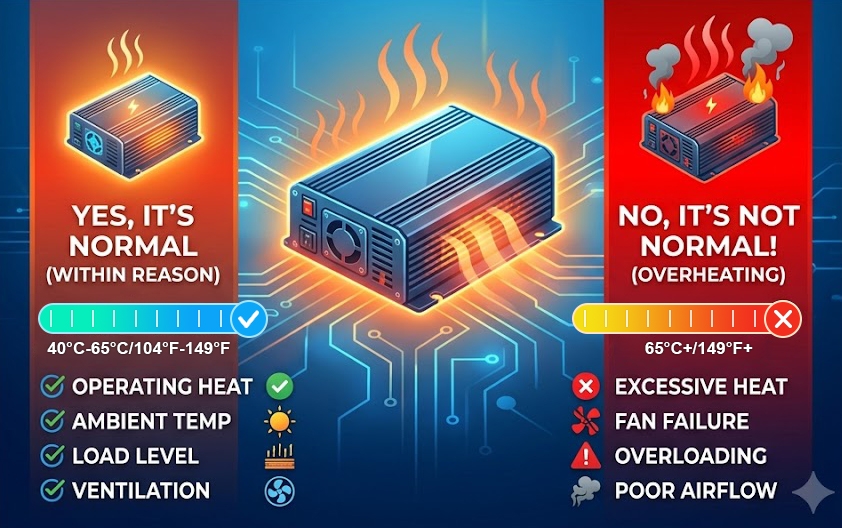
If you have ever touched your power inverter after running appliances and noticed that it feels warm or even hot, you may wonder: Is it normal for an inverter to get hot? The short answer is yes, a certain amount of heat is normal during inverter operation. A power inverter converts DC power from batteries, solar systems, or vehicles into AC power that can run household appliances, electronics, tools, and other devices. During this conversion process, some electrical energy is naturally lost as heat.
However, excessive heat, frequent overheating protection, unusual smells, or automatic shutdowns are warning signs that require attention. High-quality inverters, such as those from inverter.com, are designed with advanced cooling systems, temperature control, overload protection, and efficient circuit designs to maintain stable operation under different working conditions. Understanding why an inverter gets hot and how to prevent overheating can help improve efficiency, extend service life, and ensure safer operation.
Why Does an Inverter Generate Heat?
The main function of an inverter is to convert DC (Direct Current) power into AC (Alternating Current) power.
During this process, components such as:
- MOSFETs
- Transformers
- Capacitors
- Power switching circuits
Generate a small amount of heat because no electrical conversion system can achieve 100% efficiency. For example, a 90%-95% efficient inverter still produces heat from the remaining energy loss. The higher the power output, the more heat may be generated.
This means:
- A 300W inverter running a laptop may only become slightly warm.
- A 2000W or 3000W inverter powering heavy appliances may naturally become hotter.
Therefore, warm housing during normal operation does not always indicate a problem.
How Hot is Normal for an Inverter?
The temperature of a power inverter depends on several factors:
- Output power
- Operating time
- Installation environment
- Cooling design
- Ambient temperature
A properly working inverter may feel warm when touching the external case, especially after continuous operation.
For example:
- Light Load Operation. When powering: LED lights, mobile chargers, small electronics. The inverter usually produces minimal heat.
- Medium Load Operation. When powering: TVs, computers, small refrigerators, power tools. The inverter temperature will increase.
- Heavy Load Operation. When powering: Microwave ovens, air conditioners, large motors, pumps. The inverter may become noticeably hotter because these devices require more continuous power and higher startup current.
Many inverter manufacturers recommend keeping continuous loads below the inverter's maximum rated capacity to reduce thermal stress.
4 Common Reasons Why an Inverter Gets Too Hot:
1. The Inverter Is Working Near Maximum Capacity
One of the most common reasons for overheating is running an inverter close to its rated power for a long time.
For example:
A 1000W inverter powering a 950W appliance continuously will operate under heavy stress.
Although the inverter can technically handle the load, continuous operation near maximum capacity increases:
- Internal temperature
- Cooling fan workload
- Component aging
A better choice is selecting an inverter with extra power capacity.
For example:
- 500W load → choose around 800W-1000W inverter
- 1500W load → choose around 2000W inverter
This provides a safety margin and improves reliability.
2. Poor Ventilation and Installation Location
An inverter needs airflow to release heat. Common installation mistakes include:
- Installing inside a closed cabinet
- Blocking ventilation openings
- Placing the inverter directly under sunlight
- Installing near heat sources
Poor ventilation prevents hot air from escaping, causing internal temperature buildup.
For best performance:
✔ Install in a cool and dry location
✔ Keep ventilation openings clear
✔ Allow enough space around the inverter
✔ Avoid direct sunlight exposure
Proper ventilation is especially important for high-power models such as 3000W, 5000W, and 10000W inverters.
3. Cooling Fan Problems
Many power inverters use intelligent cooling fans that automatically adjust speed according to temperature. If the fan:
- Does not start
- Makes unusual noise
- Is blocked by dust
The inverter may overheat.
Regular maintenance includes:
- Cleaning dust from air vents
- Checking fan operation
- Keeping airflow channels open
Inverter.com sine wave inverter models are designed with temperature protection and cooling management features to help maintain stable performance.
4. High Ambient Temperature
The surrounding environment directly affects inverter temperature. An inverter installed in: A hot vehicle cabin; Outdoor locations under direct sunlight; A poorly ventilated RV compartment, will naturally operate hotter.
For example: A power inverter working normally at 25°C may experience higher temperature stress at 40°C outdoor conditions.
How to Prevent an Inverter from Overheating?
- Choose the Right Inverter Size. Avoid selecting an inverter that exactly matches your appliance power. Consider: Continuous power; Startup surge power; Future power needs. A properly sized inverter operates cooler and more efficiently.
- Keep the Inverter Ventilated. Recommended installation practices: Leave enough space around the inverter; Keep fans and vents clean; Avoid enclosed areas without airflow; Install additional ventilation if necessary.
- Reduce Unnecessary Loads. Disconnect devices that are not needed. Every connected appliance increases: Power consumption; Heat generation; Battery usage.
- Use High-Quality Batteries and Cables. A stable DC power source helps the inverter operate efficiently. Make sure: Battery voltage matches inverter requirements; Cable size matches power demand; Connections are tight and corrosion-free.
- Monitor Temperature and Performance. Modern inverters often include: LCD displays; Temperature monitoring; Over-temperature protection; Overload alarms.
When Should You Be Concerned About Inverter Heat?
Normal:
✅ Warm housing
✅ Cooling fan running during heavy loads
✅ Higher temperature after long operation
Possible problems:
❌ Burning smell
❌ Frequent shutdowns
❌ Error alarms
❌ Extremely hot surface
❌ Fan failure
❌ Reduced output power
If these symptoms appear, stop operation and check: Load size; Installation environment; Battery connection; Cooling system.
Frequently Asked Questions About Inverter Heating
Q1: Is it normal for an inverter to feel hot?
Yes. It is normal for an inverter to become warm during operation because energy conversion creates heat. However, excessive heat may indicate overload or poor ventilation.
Q2: Why does my inverter fan keep running?
The cooling fan automatically operates when internal temperature rises. Continuous fan operation usually means the inverter is working under higher loads or in a warm environment.
Q3: Can overheating damage an inverter?
Yes. Long-term overheating can shorten component lifespan and may cause thermal shutdown or permanent damage.
Q4: Should I install an inverter in a closed box?
No, unless the enclosure has proper ventilation. Heat must be removed to maintain safe operation.
Q5: Is a 48V inverter cooler than a 12V inverter?
For higher power applications, a 48V inverter usually operates more efficiently because it requires less current compared with a 12V system.
Conclusion:
A warm inverter is normal, but excessive heat needs attention. Moderate heat is a normal part of inverter operation. Power conversion, electrical resistance, and heavy loads naturally generate heat. However, an inverter should not become excessively hot or frequently shut down. Proper inverter sizing, good ventilation, correct battery connections, and regular maintenance are essential for safe and reliable performance.
Whether you choose a modified sine wave inverter, or a pure sine wave inverter, selecting a reliable model with advanced cooling and protection features can significantly improve efficiency and lifespan. For any additional questions or purchase inquiries, please feel free to contact Inverter Store. We are dedicated to serving you with quality products and professional support. A properly installed inverter should deliver stable power while managing heat effectively, allowing you to enjoy reliable electricity for home backup, camping, and RV travel.
