
When purchasing a car inverter, many people focus solely on power output while overlooking another equally critical factor: the type of inverter. In fact, even among 1000W inverters, differences in output waveforms, connection methods, and installation styles can lead to vastly different user experiences and suitability for various scenarios. This article systematically categorizes car inverters based on three dimensions to help readers find the model best suited to their needs.
Classification by Input Interface: Determining Maximum Power Output
The method used to connect the car inverter to the vehicle's electrical system directly affects its maximum power output. Inverters with different interfaces are suited to vastly different usage scenarios.
Cigarette Lighter-Style Car Inverters
Cigarette lighter-style inverters draw power from the vehicle's cigarette lighter socket; they are "plug-and-play" devices and offer the greatest convenience. However, due to the limitations of the cigarette lighter fuse, the power output generally does not exceed 200W (most vehicle models have a 15A fuse, equating to approximately 180W). This type is suitable for low-power devices such as mobile phones, laptops, and dashcams; exceeding this limit makes the fuse highly prone to blowing. Consequently, cigarette lighter-style inverters are better suited for light-duty power needs.
Direct-to-Battery Car Inverters
Direct-to-battery car inverters connect straight to the vehicle's battery using clamps or bolts, offering power outputs exceeding 300W—or even reaching several kilowatts. They are suitable for high-power appliances such as rice cookers, electric kettles, and power tools. While installation is relatively complex, their power delivery capability far surpasses that of cigarette lighter-based units. If sustained high-power usage is required, a direct-to-battery inverter is the only viable option.
Classification by Installation Type: Determining Usage Scenarios
Portable Car Inverters
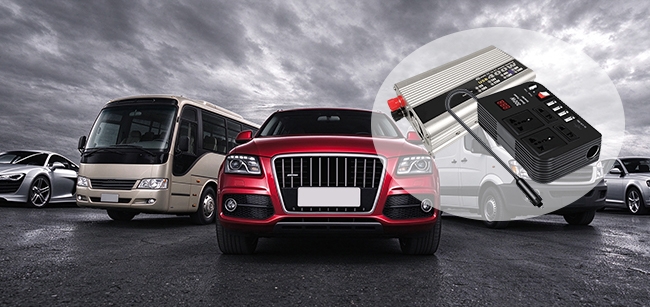
Portable car inverters are compact, lightweight, and ready to use upon plugging in, making them ideal for occasional trips or emergency situations. They offer great flexibility and can be stored in the trunk when not in use. For most average car owners, a portable inverter is sufficient to meet daily needs.
Fixed-Mount Car Inverters
Fixed-mount car inverters are hardwired directly into the vehicle's electrical system and permanently installed within the vehicle. They are suitable for scenarios such as RVs, trucks, or long-term in-vehicle power needs. They provide stable power and do not occupy the cigarette lighter socket, though installation requires some technical know-how. For users who rely on in-vehicle power over the long term, a fixed-mount inverter offers a more convenient, "set-it-and-forget-it" solution.
Classification by Input Voltage: Determining Compatibility with the Vehicle's Electrical System
The input voltage specification of a vehicle power inverter is fundamentally determined by the operating voltage of the vehicle's electrical system. Ignoring this parameter during selection can lead to issues ranging from the inverter triggering undervoltage or overvoltage protection to blown fuses or even damage to connected equipment.
Currently, 12V input inverters dominate the market, catering to standard passenger cars, SUVs, and MPVs that utilize a single-battery 12V system. This voltage platform offers the widest coverage, with products ranging from 100W to 3000W, making it the most versatile category.
24V input inverters are designed for trucks, buses, and certain construction vehicles. These vehicles typically employ a 24V electrical architecture using two batteries connected in series; using a 12V model by mistake would result in a failure to start or frequent protection triggers due to insufficient input voltage. 24V models generally feature medium-to-high power designs, making them suitable for loads such as rice cookers and power tools.
Additionally, wide-input-voltage inverters support ranges such as 10V–30V (or even broader), making them compatible with both 12V and 24V vehicles. They offer a distinct advantage in compatibility, making them ideal for scenarios involving multiple vehicles or situations where the vehicle's voltage is uncertain.
Input voltage is the primary constraint when selecting a vehicle power inverter; it must strictly match the vehicle's electrical system to ensure safe and stable operation.
Conclusion
The various types of car inverters essentially correspond to different levels of usage needs. Waveform determines compatibility, interface determines power limits, and form factor determines usage scenarios. By understanding the relationship between these three factors, you can look beyond mere power ratings when shopping; instead, you can make a more informed decision based on your actual requirements and select the car inverter that is truly right for you.
